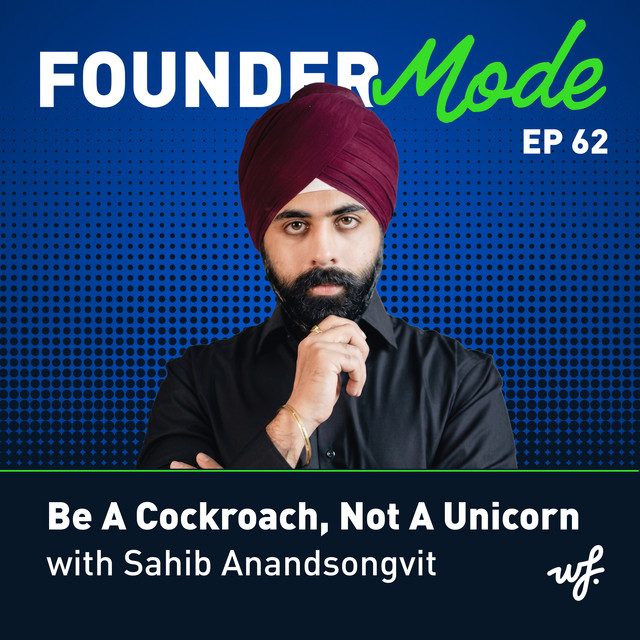
Be A Cockroach, Not A Unicorn with Sahib Anandsongvit
Pretty Good AI is hosting a live webinar next week that I think many of you will find useful.
Most healthcare AI pilots fail. Industry estimates say only about 5% ever make it into full production.
On Tuesday, June 30, at 12:00 PM PDT, we're sitting down with Jeannine Spagna and Sami Badra from Clearway Pain Solutions, a 100+ location specialty practice running athenaOne, to talk about how they successfully rolled out voice AI across their organization in just 60 days.
This won't be a product demo. It's an honest conversation about what worked, what didn't, and the lessons they learned along the way.
We'll cover:
- The six questions they asked every AI vendor before making a decision
- Why their operational complexity became an advantage instead of a blocker
- Their 60-day pilot-to-production playbook
- What they'd do differently if they started again today
If you're an athenaOne practice exploring AI, or you've been disappointed by AI pilots before, I think you'll get a lot from this session.
Date: Tuesday, June 30, 2026
Time: 12:00 PM PDT
Hope to see you there.
|
Welcome back to Founder Mode!
In this episode, we sat down with Sahib, an entrepreneur who has built companies across hospitality, marketplaces, Web3, and AI.
His story isn't about overnight success. It's about surviving long enough to earn success.
We talked about building marketplaces from scratch, surviving COVID, learning from crypto, and why founders should stop chasing unicorns and start thinking like cockroaches.
Let's get into it.
1. Stop Chasing Unicorns
Every founder hears the same story.
Build the next unicorn.
Raise more money.
Get a billion-dollar valuation.
Sahib believes that's one of the biggest mistakes founders make.
"The vision of trying to get to a unicorn is definitely there. But remember that it takes you multiple beatings to be able to get up and fight another day."
That idea really stuck with me.
The companies that survive aren't always the flashiest ones.
They're the ones that can take the hit and keep moving.
2. Your First Customers Don't Care About Your Product
One of my favorite stories from this conversation was how Sahib found his first customers.
His first customer needed a makeup artist for Halloween.
He didn't have a platform.
He didn't have software.
He didn't even have branding.
He called his girlfriend, asked for five makeup artist contacts, and made it happen.
His second customer needed a house cleaner.
He literally drove his own housekeeper to the customer's home while she wore a plain black T-shirt.
No app.
No logo.
Just execution.
As I said during the episode:
"For the first ten customers, you don't have to have a product. You just need to get it done."
That mindset still works today.
3. The Supply Side Is Harder Than It Looks
Marketplaces are difficult.
Most founders obsess over customers.
But Sahib learned the hard way that managing providers was the real challenge.
Scheduling.
Communication.
Reliability.
Training.
Reminders.
Those problems don't magically disappear.
Technology helped automate almost everything except the service itself.
Sometimes the boring operational work becomes a competitive advantage.
4. Distribution Is Becoming the Moat
AI has lowered the cost of building software.
Anyone can create an app.
Anyone can launch a product.
That means getting attention matters more than ever.
Sahib said something I completely agree with.
If you're building today and don't have an online presence, you're becoming invisible.
Founders need to tell the story behind what they're building.
People don't just buy products anymore.
They buy trust.
They buy consistency.
They buy founders who keep showing up.
5. Hire Smart People Then Let Them Win
One lesson Sahib learned over time was that he tried to control too much.
He micromanaged.
He expected too much.
Eventually, he realized something every founder learns.
Hire people smarter than you.
Build systems.
Then let them do their job.
That frees founders to focus on the next problem instead of every problem.
Final Thoughts
This conversation reminded me that startups aren't won by the founders who never struggle.
They're won by the founders who refuse to quit.
AI is changing how we build.
Funding cycles come and go.
Markets rise and crash.
But resilience never goes out of style.
One quote from Sahib perfectly captured the episode:
"Be vulnerable about it and make people realize that this is all part of the actual journey."
That's what real founder mode looks like.
It isn't pretending everything is working.
It's getting back up after things stop working.
And that's usually what separates the founders who eventually win.
5 Key Takeaways
- Stop chasing unicorns. Build companies that survive.
- Your first customers care about execution, not polish.
- Marketplace businesses are won on the supply side.
- Distribution and personal brand are becoming bigger competitive advantages.
- Hire smart people, build systems, and stop micromanaging.
🎧 Listen to Episode 62 here:

This podcast builds on the Founder Mode newsletter.
Let’s build.
-kevin
2810 N Church St #87205, Wilmington, DE 19802
Unsubscribe · Preferences