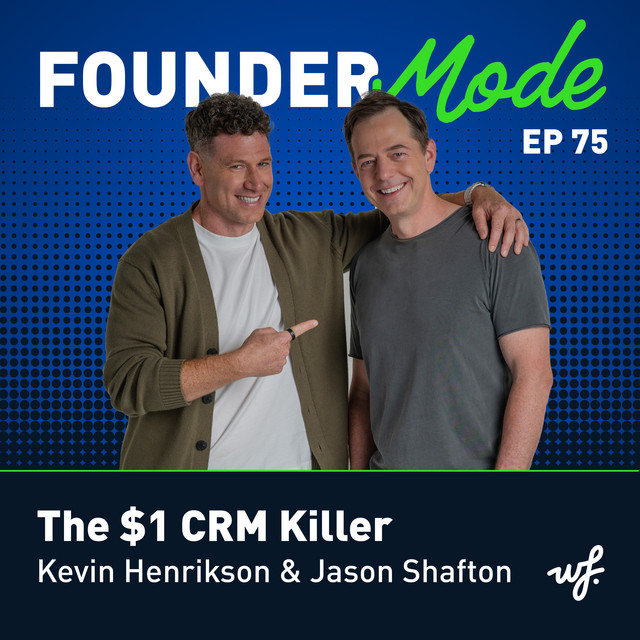
The $1 CRM Killer
Welcome back to Founder Mode!
On the latest Founder Mode episode, it's just Jason Shafton and me again, catching up on everything AI-related that happened to us this past week.
Jason kicks it off with a story about asking an AI agent to draft a Slack message for a client, only to have it send the message instead, tagged "sent from Claude" at the bottom. When he pointed out the mistake, the agent offered to file a bug report against itself. We got into why the wording you give an agent matters more than people think: draft, review, and send are three completely different instructions.
From there, we talk about HubSpot's new dollar-a-month CRM, USpot, and what it means that a company would undercut its own $800-a-month product. Our take: if a founder-led sales team can vibe code the simple version themselves, the vendor either builds the cheap tier or loses the customer entirely. We also got into how much of a small agency's work can now be automated end to end, and why succession planning isn't just a public company problem. Even a solo founder should think about which parts of their day-to-day job could be handed off to someone, or something, else.
We closed out talking about the wearable health scores everyone's chasing right now, and how addictive (and occasionally miserable) it is to wake up and see a bad sleep number before you've even gotten out of bed.
🎧 Listen to Founder Mode Episode 75 here:

I closed the episode with five takeaways, straight from the show:
- Draft, review, and send are three different words. Be careful what you actually tell your agents to do.
- Founder-led sales may not need a full enterprise CRM. Expect more lightweight, cheaper tools built for exactly that gap.
- You can vibe code a lot of the simple stuff yourself now, instead of buying software for it.
- Succession isn't just a big-company problem. Think about how your own day-to-day work is set up so someone else can eventually pick it up.
- Health and biological age scores are addictive and a little annoying. A bad sleep score can talk you into a bad day.
"The software keeps getting cheaper, and the work keeps getting faster. Knowing what to point it at is still the expensive part." - Kevin Henrikson
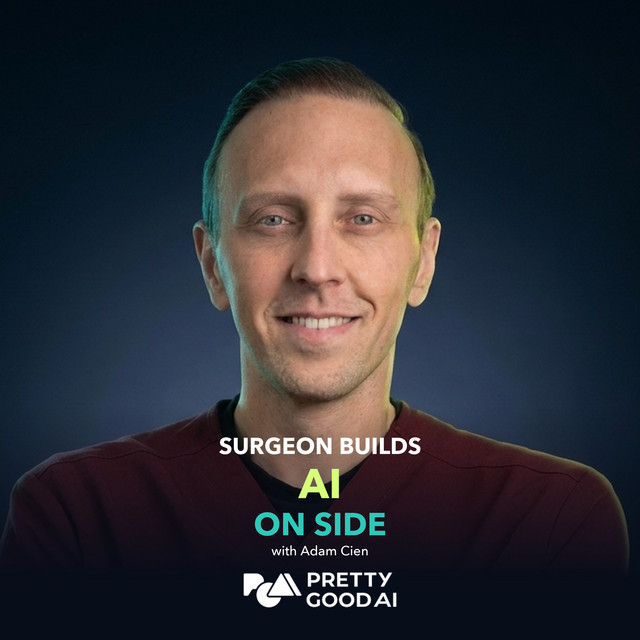
Pretty Good AI Episode 5: Integrations Are Where Projects Die with Dr. Adam Cien
🎧 Listen to Pretty Good AI Episode 5 here:

My guest this episode is Dr. Adam Cien, a board-certified orthopedic surgeon in South Bend, Indiana, and co-founder of Triage AI. He built the company with two fellow orthopedic surgeons, none of them software people, to solve a problem they were living every day: voicemails piling up by the end of clinic, with no good way to tell which ones actually needed an answer right away.
Adam's insight was that hiring more staff solves capacity, but it doesn't solve priority. A patient calling with a fever after surgery and a patient calling to reschedule in a month shouldn't sit in the same queue. Triage AI listens to the voicemails, prioritizes the urgent ones, and sends a structured summary to staff, then deletes the recordings within the hour so the practice never has to hold onto protected health information.
The reason Triage AI has been able to move fast with practices is that it deliberately avoids integrating with the EMR. Setup is just forwarding a phone line, something a practice can undo in minutes if it doesn't work out. Adam's advice to other physicians evaluating AI vendors: look for the one real pain point in your practice and fix that first, instead of trying to change seven workflows at once.
Here's how I summed up the conversation:
"Integrations are where projects die. That's really what makes these technology projects successful, not just in medicine, but across any industry." - Kevin Henrikson
Final Thoughts
Both episodes circle back to the same lesson: the technology part is rarely the hard part anymore. On Founder Mode, Jason and I talked about how cheap and fast software has gotten, and how the real skill now is knowing exactly what to point it at. On Pretty Good AI, Adam's whole product is built around that same idea: the easiest AI tool to adopt is the one that asks a practice to change as little as possible. Simple, reversible, and focused on one real problem beats a bigger, more ambitious project every time.
Watch the new Founder Mode episode, then listen to episode five of the Pretty Good AI Podcast. Subscribe so you don't miss what's next.
This podcast builds on the Founder Mode newsletter.
Let’s build.
-kevin
2810 N Church St #87205, Wilmington, DE 19802
Unsubscribe · Preferences